Locke Draft Working Paper, May 2026
Abstract
This paper proposes Voluntary Hypercapnic Recovery (VHR), a theoretical protocol for improving recovery between intermittent, predominantly anaerobic efforts by preserving CO2 during rest intervals. Existing voluntary hypoventilation training (VHT) protocols impose breath holds during the work phase; VHR instead targets the recovery phase, where phosphocreatine resynthesis and other oxygen-dependent restoration processes are actively occurring. The protocol has two intensity tiers: nasal-only breathing during recovery as a base tier, and short voluntary recovery-phase breath holds for athletes with sufficient CO2 tolerance as an advanced tier. It also distinguishes micro-recovery windows, where nasal-only breathing may be practical without interfering with game demands, from macro-recovery windows, where deliberate breath-hold amplification may be feasible. The primary proposed mechanism is enhanced fractional oxygen unloading through the Bohr effect, with possible secondary contributions from perfusion changes, nasal nitric oxide, and autonomic downshift. The model predicts that VHR will preserve higher end-tidal CO2 than oral recovery, improve muscle reoxygenation kinetics, and enhance late-bout performance, with benefit magnitude moderated by baseline CO2 tolerance as estimated by the Buteyko Control Pause. Existing RSH-VHL studies support adjacent hypoventilation mechanisms but have not tested recovery-phase timing or CO2 tolerance as a moderating variable. This paper outlines the theoretical basis, boundary conditions, candidate suitability across modalities, and an empirical validation pathway.
Introduction
Across a wide range of athletic disciplines, the rest interval between bouts of intense exertion is treated as a passive waiting period. Whether between sets of heavy squats, between pitches in a baseball game, between points in tennis, between rounds in boxing, or between sprint repetitions in field sport training, the near-universal behavioral response during recovery is heavy, unrestricted oral breathing. The athlete opens the mouth and pants, driven by the acute sensation of air hunger following intense exertion.
In many intermittent-exercise contexts, this instinctive response may be counterproductive when it becomes excessive hyperventilation rather than necessary ventilation. Heavy oral breathing rapidly clears carbon dioxide from the blood, driving arterial CO2 partial pressure (PaCO2) from exercise-elevated levels down to 31 to 32 mmHg within minutes of exercise cessation. This hypocapnia produces a leftward shift in the oxyhemoglobin dissociation curve, causing hemoglobin to bind oxygen more tightly and release it less readily at the tissue level. The athlete may achieve full arterial oxygen saturation while hemoglobin releases less oxygen to the tissue, potentially reducing functional oxygen availability during the recovery window.
This paper proposes a specific, actionable protocol that reverses this dynamic. The Voluntary Hypercapnic Recovery (VHR) protocol operates on a two-dimensional framework. The first dimension is intensity: a base tier (nasal-only breathing during rest) and an advanced tier (voluntary breath holds during rest). The second dimension is temporal context: micro-recovery windows (brief intervals between individual efforts within a bout, such as between pitches or between points) and macro-recovery windows (longer dedicated recovery periods between bouts, such as between innings, between rounds, or between sets). The base tier maps naturally onto micro-recovery windows where the athlete has competing cognitive demands and simply closes the mouth. The advanced tier maps onto macro-recovery windows where dedicated recovery time permits deliberate breath-hold work. At the base level, the athlete simply breathes through the nose during rest intervals rather than panting through the mouth. The 150% to 200% greater airflow resistance of the nasal passages prevents rapid CO2 clearance, maintaining a mild hypercapnic state that sustains the Bohr effect and enhances oxygen delivery to recovering tissue. At the advanced level, the athlete adds voluntary breath holds during the initial portion of each macro-recovery window, further elevating CO2 and driving a more aggressive Bohr effect during the critical first 30 to 60 seconds of recovery when oxygen demand is highest.
Both tiers apply to any exercise modality with intermittent work-rest structure where work phases are brief and predominantly anaerobic. This includes but is not limited to: resistance training (all modalities), pitching (baseball, softball, cricket), tennis (between points and during changeovers), martial arts and combat sports (between rounds or exchanges), sprint interval training, field sport conditioning (repeated sprints with recovery), boxing, wrestling, and high-intensity interval training (HIIT). The common requirement is that the work phase is short enough that it does not depend on sustained high ventilatory throughput, which means nasal restriction is predicted to impose minimal performance cost during exertion while delivering meaningful recovery benefit during rest.
The protocol is gated by a single prerequisite variable: CO2 tolerance. At the base tier, minimal tolerance is required; most athletes can breathe through the nose during rest without distress. At the advanced tier, the athlete must tolerate the elevated CO2 produced by a post-exertion breath hold without their chemoreceptors triggering panic and forced oral hyperventilation. CO2 tolerance is measurable through the Buteyko Control Pause and is trainable through progressive breath-hold protocols, meaning both the prerequisite and the dose-response variable are modifiable.
The Bohr Effect: Mechanism and Magnitude During Intermittent Exertion
Molecular Mechanism
The Bohr effect, first described by Christian Bohr in 1904, is the fundamental inverse relationship between the oxygen-binding affinity of hemoglobin and the surrounding concentrations of carbon dioxide and hydrogen ions. Hemoglobin is a tetrameric protein that binds oxygen with positive cooperativity, resulting in the classic sigmoidal shape of the oxyhemoglobin dissociation curve. The functional state of hemoglobin constantly shifts between a relaxed (R) state, which exhibits high affinity for oxygen to facilitate loading in the pulmonary capillaries, and a tense (T) state, which possesses lower affinity for oxygen to facilitate unloading in the peripheral tissues.
Carbon dioxide facilitates the transition to the T-state, and thereby promotes oxygen offloading, through two primary biochemical pathways. First, CO2 readily diffuses from metabolically active tissues into the erythrocyte, where it is rapidly hydrated by the enzyme carbonic anhydrase to form carbonic acid (H2CO3). This weak acid instantaneously dissociates into bicarbonate (HCO3 -) and hydrogen ions (H+). The liberated hydrogen ions bind to specific amino acid residues on the hemoglobin molecule, most notably the histidine residues, which stabilizes the deoxygenated T-state through the formation of salt bridges (Jensen, 2004). Second, CO2 can bind directly to the uncharged amino-terminal groups of the four globin chains, forming carbaminohemoglobin. This direct binding also allosterically stabilizes the T-state and reduces oxygen affinity independently of pH changes.
Quantifying the Rightward Shift: Normocapnia vs. Mild Hypercapnia
In healthy human subjects at rest, PaCO2 is tightly regulated near 40 mmHg, maintaining an arterial pH of approximately 7.4. Under these baseline conditions, the P50, defined as the partial pressure of oxygen required to achieve 50% saturation of hemoglobin, is clinically established at 26.7 to 27.1 mmHg. This specific P50 ensures optimal oxygen saturation in the lungs while allowing adequate oxygen release at the resting tissue PO2 of approximately 40 mmHg.
Mild hypercapnia, functionally defined in this athletic context as an elevation of PaCO2 to the upper physiological limits of 42 to 48 mmHg, induces a predictable and beneficial rightward shift of the dissociation curve. Mathematical modeling demonstrates that the P50 and the Bohr factor are directly linked. Elevating PaCO2 from 40 mmHg to 48 mmHg shifts the P50 upward from approximately 27 mmHg to approximately 31 mmHg.
While a 4 mmHg shift in P50 may appear modest, the sigmoidal geometry of the dissociation curve means this shift has a disproportionately massive impact on the steep middle portion of the curve. This steep section corresponds precisely to the physiological PO2 found in working skeletal muscle tissue during intense intermittent exercise, which typically ranges between 20 and 40 mmHg. At a localized tissue PO2 of 30 mmHg with a systemic PaCO2 of 40 mmHg, hemoglobin saturation remains at approximately 57%, meaning only 43% of bound oxygen has been released. At the same tissue PO2 with an elevated PaCO2 of 48 mmHg, hemoglobin saturation drops to approximately 45 to 50%.
This differential translates into a substantial increase in the volume of oxygen released from erythrocytes into the plasma and muscle cells. Blood gas analyses indicate that a 6 mmHg arterio-venous increase in PCO2 contributes to the release of more than 26 mL of additional O2 per minute, effectively increasing total peripheral oxygen delivery by approximately 10% without any increase in cardiac output or arterial PO2. In the context of intense intermittent exercise, where local muscular oxygen tension plummets and the cellular energy crisis demands immediate aerobic intervention during the rest interval, this 10% amplification in oxygen bioavailability represents a potentially meaningful recovery advantage.
An important boundary condition applies to this quantitative estimate. The Bohr effect is driven by both PCO2 and H+ (pH). During intensely glycolytic efforts such as extended wrestling exchanges, 400-meter sprints, or high-rep hypertrophy sets, massive lactic acid production can drive localized capillary pH down to approximately 6.8 while temperature rises to approximately 39 degrees C. Under these conditions, the severe local metabolic acidosis has already pushed the P50 massively rightward, and hemoglobin in the acidic, heated local environment is already releasing 80 to 90% of its oxygen. Adding systemic respiratory CO2 retention on top of this extreme metabolic shift produces mathematically negligible additional oxygen release, perhaps 1 to 2% rather than 10%. The Bohr effect is effectively saturated by the local lactic acidosis. The 8 to 12% oxygen-unloading benefit therefore applies primarily to alactic or mildly glycolytic efforts: pitching, powerlifting singles and doubles, tennis points, sprint starts, and similar brief explosive movements where local muscle pH does not plummet to extreme levels. The paper's quantitative claims should be understood as bounded to these alactic modalities.
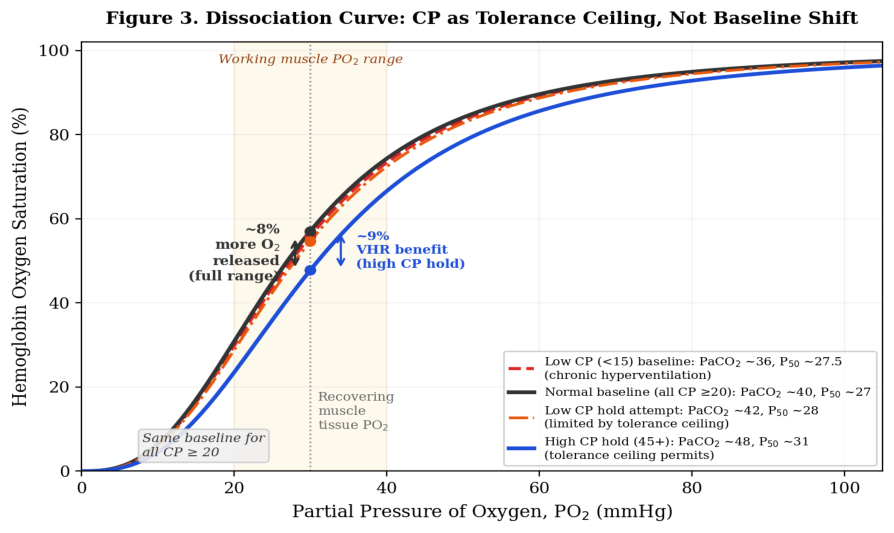
Figure 3. The oxyhemoglobin dissociation curve illustrating how Control Pause interacts with the Bohr effect. A low-CP athlete (dashed red, chronic hyperventilator, PaCO2 ~ 36 mmHg) operates with a genuinely leftward-shifted baseline due to habitual CO2 depletion. Normal and high-CP athletes share the same normocapnic baseline (PaCO2 ~
40 mmHg); the body defends resting PaCO2 near 40 through renal bicarbonate buffering regardless of CP level. The difference between moderate and high CP is not baseline PaCO2 but tolerance ceiling: a high-CP athlete can sustain a breath hold pushing PaCO2 to 48 mmHg (dark blue curve, P50 ~ 31) without chemoreceptor panic, while a low-CP athlete cannot. CP is therefore a tolerance metric, not a baseline homeostatic shift. Note: PaCO2 mappings require direct validation with capnography.
Relevance to Between-Bout Recovery
During intense intermittent exertion, regardless of modality, localized muscular oxygen tension plummets as the phosphagen and glycolytic systems deplete substrates and accumulate metabolic byproducts. Several key recovery processes are strongly oxygen-dependent: phosphocreatine resynthesis, lactate clearance, and hydrogen ion buffering all require oxygen at the mitochondrial level. In alactic or mildly glycolytic efforts where the metabolic ceiling described above does not apply, an 8 to 12% increase in fractional oxygen unloading during the critical first 30 to 60 seconds of rest may meaningfully accelerate between-bout recovery. In heavily glycolytic efforts where local metabolic acidosis has already saturated the Bohr effect, the additional benefit from respiratory CO2 retention will be substantially smaller.
CO2 Dynamics During Intermittent Exercise: The Oral Breathing Problem
Exercise-Induced Hypocapnia Through Compensatory Hyperventilation
During and immediately following high-intensity intermittent exertion, the ventilatory drive consistently overcompensates. As the athlete completes the effort and transitions into the rest interval, the mechanical constraint of bracing (in resistance training, the Valsalva maneuver) is removed, and the athlete typically engages in heavy, unrestricted oral panting. This hyperventilatory response is driven by a combination of elevated sympathetic nervous system tone, acute metabolic acidosis, and afferent neural feedback from the fatigued muscle.
Because oral breathing offers minimal airway resistance, this massive increase in minute ventilation rapidly flushes accumulated CO2 from the alveoli. The blood-gas gradient forces dissolved CO2 in the pulmonary capillaries to diffuse into the lungs and be exhaled. Research tracking arterial blood gases during exhausting exercise and subsequent recovery reveals a paradoxical phenomenon: while arterial PO2 may actually rise in early recovery due to the hyperventilation, PaCO2 plummets. Clinical observations show PaCO2 falling to as low as 31.9 mmHg within two minutes of recovery, remaining depressed in a state of hypocapnia for up to 15 minutes post-exercise.
This hypocapnia may impair localized recovery. A PaCO2 of 32 mmHg forces a sharp leftward shift in the oxyhemoglobin dissociation curve, reducing Bohr-effect-mediated oxygen unloading. Even if the athlete achieves 100% SpO2 through heavy mouth breathing, hemoglobin will resist releasing that oxygen to the recovering muscle tissues, starving the mitochondria at the precise moment they require maximal oxygen flux to rebuild ATP reserves.
Nasal Breathing as a Mechanical Ventilatory Restrictor
Voluntary nasal-only breathing directly impedes this hyperventilatory overcompensation. Due to the complex, turbinate-lined anatomy of the nasal passages, nasal breathing presents approximately 150% to 200% greater airflow resistance compared to the oral cavity. During exercise recovery, when the metabolic and neural drives demand increased ventilation, forcing respiration exclusively through the narrow nasal turbinates inherently places a ceiling on maximum achievable minute ventilation, preventing the rapid and excessive expulsion of carbon dioxide.
Clinical comparisons measuring end-tidal gases between oral and nasal breathing during physical exertion validate this mechanism. During submaximal constant-load exercise, end-tidal CO2 (PETCO2), a practical non-invasive proxy for arterial PaCO2, is maintained at significantly higher levels with strict nasal breathing. In rigorous clinical trials, nasal-only breathing resulted in a 26% lower breathing frequency, a significantly reduced total ventilation rate, and approximately 10% higher PETCO2 compared to the oral breathing condition. The increased airway resistance forces a slower, deeper breathing pattern that allows more time for gas exchange in the alveoli but critically limits the total volume of CO2 exhaled per minute.
Projected PaCO2 Levels During Rest Intervals
When these mechanics are applied to the typical 60 to 90 second rest interval utilized in resistance training programs or comparable rest periods in other intermittent modalities, a distinct physiological divergence occurs based on breathing modality. An athlete relying on open-mouth breathing will rapidly clear the large bolus of CO2 generated during the effort, driving PaCO2 down toward 32 to 35 mmHg, inducing a leftward dissociation curve shift and throttling tissue oxygenation. An athlete adhering to nasal breathing utilizes the inherent resistance of the nasal passages to retain the CO2 bolus, potentially maintaining CO2 closer to normocapnic or mildly hypercapnic ranges in tolerant athletes rather than allowing the hypocapnic drop. This athlete begins the subsequent effort in an environment that may better support localized oxygen unloading, rather than beginning in a state of hypocapnic vasoconstriction and restricted oxygen delivery. Direct PETCO2 measurements during nasal-only recovery are needed to confirm these projected values, as current data are derived primarily from submaximal exercise rather than post-maximal intermittent recovery.
The Intermittent Exercise Asymmetry
The Ventilatory Bottleneck in Sustained Cardiovascular Exercise
During continuous, high-intensity aerobic exercise, such as competitive running, cycling at VO2max, or rowing, the metabolic demand for oxygen is immense, continuous, and progressively increasing. Relying exclusively on nasal respiration under these conditions induces significant impairment on peak exercise capacity. Cardiopulmonary exercise testing comparing breathing modalities demonstrates that nasal-only subjects exhibit significantly lower peak oxygen uptake, lower peak CO2 removal, drastically lower peak minute ventilation, significantly higher perceived exertion, and a much lower overall peak workload before exhaustion. The narrow cross-sectional area and complex turbinate structure of the nasal passages cannot physically accommodate the massive volume of air exchange required for maximal aerobic output, creating a severe ventilatory bottleneck that overwhelms any peripheral oxygenation benefit.
The Absence of Performance Decrement in Intermittent Anaerobic Exertion
The architecture of intermittent exercise with brief work phases circumvents this ventilatory limitation entirely. A typical set of heavy squats or deadlifts lasts 15 to 45 seconds. A pitcher's delivery sequence, a tennis rally, a boxing combination, or a sprint repetition all draw energy from stored intracellular substrates: ATP, phosphocreatine, and muscle glycogen. There is no requirement for sustained, real-time pulmonary oxygen uptake during the work phase itself.
This paradigm is directly supported by Wingate Anaerobic Test data. In a robust crossover study involving 49 healthy individuals performing maximal 30-second cycle sprints, the gold standard for anaerobic capacity assessment, researchers found absolutely no significant differences in mechanical output. Peak power output was virtually identical (749 +/- 290 W for oral versus 728 +/- 284 W for nasal, p=0.2), and average power output showed the same parity (576 +/- 217 W oral versus 575 +/- 216 W nasal, p=0.2).
Crucially, while mechanical performance remained identical regardless of breathing modality, the recovery metrics following exertion diverged significantly in favor of nasal breathing. Continuous near-infrared spectroscopy (NIRS) data collected from the vastus lateralis during the Wingate tests revealed that nasal breathing resulted in a significantly faster post-exercise muscle oxygen resaturation rate (0.45 +/- 0.4 %/s) compared to oral breathing (0.23 +/- 0.12 %/s, p=0.02). Furthermore, the absolute magnitude of total tissue oxygen compensation was greater for nasal breathing (75.2% versus 73.1%, p=0.04). Comparable work output with enhanced recovery.
Similarly, studies assessing repeated muscular endurance protocols, such as bench press sets to failure at 60% of body weight with varying breathing regimens, found no significant differences in total repetitions to failure or peripheral blood oxygen saturation regardless of breathing modality.
This asymmetry is the foundation of the VHR protocol. In any activity where work phases are brief and anaerobic, nasal breathing during rest may provide a low-cost means of preserving CO2 and sustaining Bohr-effect-mediated oxygen unloading. The list of applicable activities is extensive: resistance training of all modalities, baseball and softball pitching, tennis, martial arts and combat sports, cricket bowling, sprint interval training, volleyball, field sport repeated-sprint protocols, and any HIIT format with defined rest intervals.
Between-Bout Recovery Physiology: The Oxygen Dependency
The Absolute Oxygen Dependence of Phosphocreatine Resynthesis
The primary energetic currency of high-intensity intermittent exercise is the phosphagen system. Within the skeletal muscle cell, phosphocreatine (PCr) represents the most immediate reserve for the rephosphorylation of adenosine diphosphate (ADP) back into ATP during sudden, explosive muscular contraction. Because this reaction is immediate and oxygen-independent, intense exercise can rapidly deplete local PCr stores to less than 30% of resting baseline levels within seconds. The magnitude of this PCr depletion correlates directly with the onset of muscular failure and a subsequent drop in power output on consecutive bouts.
Crucially, while the breakdown and utilization of PCr is anaerobic, its resynthesis during the rest interval is absolutely and entirely dependent upon oxidative phosphorylation. The rephosphorylation of free creatine requires ATP generated exclusively by the mitochondria, a process strictly dictated by the availability of molecular oxygen. Experimental data utilizing 31P-nuclear magnetic resonance spectroscopy has firmly established this dependency: when local circulation to an exercised muscle is occluded via a pneumatic tourniquet, preventing the delivery of oxygenated blood, the resynthesis of PCr is completely inhibited. The intracellular concentration remains depleted until perfusion and oxygen delivery are restored.
The kinetics of PCr recovery follow a distinct biphasic, monoexponential pattern. The critical fast phase of resynthesis occurs very rapidly, almost exclusively within the first 30 to 60 seconds of the recovery interval, provided that oxygen is abundant and unconstrained. The rate constant of this resynthesis is directly proportional to the muscle's inherent oxidative capacity and the real-time availability of localized tissue oxygen. Therefore, any physiological mechanism that elevates localized tissue PO2 during this critical window may accelerate the fast phase of PCr resynthesis, particularly when oxygen delivery or oxygen unloading is the limiting factor. By sustaining a mild hypercapnic state via nasal breathing or breath holds, the Bohr effect forces hemoglobin to offload its oxygen payload into the myoglobin and the surrounding mitochondrial network, potentially reducing oxygen unloading as a constraint on early PCr recovery.
Lactate Clearance and Intracellular Hydrogen Ion Buffering
The secondary limitation to inter-bout recovery is the accumulation of metabolic waste products, specifically inorganic phosphate and hydrogen ions resulting from heavy reliance on anaerobic glycolysis. As these metabolites accumulate, they lower intracellular pH, creating an acidic environment that directly inhibits the activity of key glycolytic enzymes like phosphofructokinase and competitively binds to troponin, physically impeding the cross-bridge cycling of muscle fibers. The clearance of lactate and the buffering of hydrogen ions are similarly dependent on active vascular perfusion and aerobic metabolism. Maintaining enhanced blood flow and oxygen delivery throughout the rest interval is essential to expedite the oxidation of lactate back into pyruvate within the muscle cell, or to facilitate its convective transport away from the muscle to the liver for gluconeogenesis via the Cori cycle.
The synthesis of these mechanisms indicates that the rest interval is not a passive physiological state but an active, oxygen-dependent rebuilding phase. CO2 preservation during this window may support recovery by enhancing fractional oxygen unloading from circulating hemoglobin.
Secondary Mechanisms
While the Bohr effect is the primary proposed mechanism, three secondary mechanisms may also contribute. Each carries greater uncertainty and is presented here for completeness rather than as a core claim of the model.
CO2, Local Metabolites, and Context-Dependent Perfusion Effects
Beyond its effect on hemoglobin affinity, CO2 and associated pH and metabolite changes may contribute to local vascular regulation during recovery. In response to increasing PCO2 and the resulting drop in localized pH, vascular smooth muscle lining the arterioles relaxes, leading to increased regional perfusion. This vasodilatory response is well-established in the cerebral circulation.
During maximal exertion, the central sympathetic nervous system drives systemic vasoconstriction to maintain central venous pressure. However, within actively contracting skeletal muscle, a mechanism known as functional sympatholysis occurs. Local metabolic byproducts, primarily CO2, H+, adenosine, and potassium, locally override sympathetic vasoconstrictor tone, forcing feed arteries to dilate. During the actual contractions, blood flow is physically restricted by mechanical compression. The moment the effort concludes and the muscle relaxes, the accumulated vasodilators trigger reactive hyperemia. Maintaining a mild hypercapnic state via nasal breathing throughout the rest interval may amplify the magnitude and duration of this post-exertion vasodilation.
However, skeletal-muscle blood-flow responses to systemic hypercapnia are context-dependent and may differ from cerebral responses. A human study during dynamic knee-extension exercise found that hypercapnia increased cerebral blood flow but did not increase exercising leg blood flow, with vascular conductance in the active leg actually lower under hypercapnia. This suggests that the perfusion benefit of CO2 retention in skeletal muscle should not be treated as established and requires direct measurement in the specific context of intermittent exercise recovery. The Bohr-effect oxygen-unloading mechanism remains the primary pillar of the VHR hypothesis regardless of how the perfusion question resolves.
If the perfusion effect does operate in recovering skeletal muscle, it would be synergistic with the Bohr effect: increased blood volume arriving at the muscle (via dilated vessels) carrying hemoglobin primed to surrender its oxygen payload more readily (via the rightward-shifted dissociation curve). However, the Bohr-effect component stands independently of the perfusion question.
Nasal Nitric Oxide: Pulmonary Gas Exchange, Not Systemic Vasodilation
The human paranasal sinuses continuously generate nitric oxide (NO) at concentrations substantially higher than those in the lower bronchi. When an athlete breathes through the nose, this NO-laden air is drawn into the lungs. However, free NO has a half-life of mere milliseconds in the blood, where it is rapidly scavenged by hemoglobin to form nitrosylhemoglobin. The idea that inhaled nasal NO survives transit through the pulmonary circuit, the left heart, and the arterial tree to dilate peripheral skeletal muscle vasculature is not supported by current hematology.
The more defensible mechanism is local: nasal NO acts within the lungs to improve ventilation-perfusion (V/Q) matching. This is actually a strong argument for the Base Tier. Nasal breathing restricts total ventilatory volume, which raises the question of whether reduced airflow compromises arterial oxygen saturation. Nasal NO may resolve this concern by optimizing gas exchange efficiency within the lungs, allowing the athlete to breathe smaller volumes of air through the nose while still maintaining near-100% arterial SpO2. This ensures that the hemoglobin arriving at recovering muscle is fully loaded with oxygen, which the Bohr effect then drives to be released more completely. The NO contribution to VHR is therefore pulmonary, not peripheral: it protects arterial saturation during reduced-volume nasal breathing, preserving the oxygen payload that the Bohr effect then unloads.
Research measuring Flow-Mediated Dilation (FMD) following exhaustive anaerobic exercise found significant improvement with nasal breathing (p < 0.001) and no improvement with oral breathing. While this finding is suggestive, the FMD improvement may reflect improved arterial oxygen content and downstream vascular signaling rather than direct NO-mediated peripheral vasodilation. The mechanism requires further investigation.
Autonomic and Ventilatory Efficiency Effects
Nasal breathing during recovery may also promote a calmer autonomic state through slower, deeper breathing patterns. The increased airway resistance of nasal breathing forces a lower respiratory rate and greater tidal volume, which may enhance ventilation-perfusion matching, improve gas exchange efficiency, and reduce the sympathetic overshoot associated with post-exertion oral hyperventilation. This autonomic component is underdeveloped in the current model but may contribute meaningfully to recovery quality and warrants further investigation.
CO2 Tolerance as the Prerequisite and Dose-Response Variable
Chemoreceptor Sensitivity as the Gating Mechanism
The medullary respiratory centers in the brainstem are exquisitely sensitive to fluctuations in PaCO2 and the resulting pH shifts in the cerebrospinal fluid. In untrained individuals, or those who present with dysfunctional breathing patterns (chronic oral hyperventilation), these medullary chemoreceptors become hypersensitized to CO2. For these individuals, even a minor elevation in PaCO2 triggers severe dyspnea, psychological panic, and an overwhelming, involuntary urge to switch to open-mouth panting.
The Control Pause as a Diagnostic Metric
Baseline CO2 tolerance can be practically estimated in the field using the Buteyko Control Pause (CP), defined as the time an individual can comfortably hold their breath following a normal passive exhalation before experiencing the first distinct physiological urge to inhale. A CP below 15 seconds indicates high central chemosensitivity, chronic hyperventilation, low baseline PaCO2, and a high likelihood of dysfunctional breathing patterns. A CP of 20 to 30 seconds represents the average baseline for the general population. A CP above 40 to 45 seconds may indicate greater tolerance of CO2 accumulation and lower air-hunger reactivity, but the precise relationship between CP and resting PaCO2 should be directly validated. The CP's utility as a non-invasive respiratory control marker is supported by Messineo et al. (2018), who demonstrated that voluntary breath-hold duration during wakefulness is a strong, independent predictor of loop gain during NREM sleep, supporting the view that voluntary breath-hold duration reflects respiratory-control traits rather than merely willpower or lung capacity. Future validation should directly correlate CP with resting PaCO2 and with between-bout recovery kinetics in athletes to establish predictive validity in this specific context.
Tiered Protocol Access
Base tier (nasal-only breathing during rest): Accessible to most athletes with a CP of 15 seconds or above. The athlete simply closes the mouth during rest intervals. The nasal restriction prevents CO2 clearance and maintains the Bohr effect at a moderate level. This tier alone reverses the oral hyperventilation problem and represents a significant improvement over conventional practice. No breath-hold tolerance is required.
Advanced tier (breath holds during rest): Accessible to athletes with a CP of approximately 30 seconds or above. The athlete performs a voluntary breath hold of 15 to 45 seconds at the beginning of each rest interval, then resumes nasal breathing. This drives a more aggressive Bohr effect during the critical fast phase of PCr resynthesis. Athletes with CP above 45 seconds can sustain holds covering the entire fast phase without autonomic distress, extracting maximal benefit.
CO2 Tolerance as a Dose-Response Variable
A critical physiological clarification: the human body strictly defends resting arterial PaCO2 near 40 mmHg and pH near 7.4 via renal bicarbonate buffering. A high-CP athlete does not walk around in a state of chronic hypercapnia; a resting PaCO2 of 45+ would be pathological. Normal and high-CP athletes share essentially the same normocapnic resting baseline. What a high Control Pause indicates is blunted central chemoreceptor sensitivity: the brainstem does not trigger dyspnea or panic when CO2 rises above 40 mmHg. CP is therefore a tolerance ceiling metric, not a baseline homeostatic shift.
The exception is at the low end of the CP spectrum. Athletes with very low CP (below 15 seconds) are likely chronic hyperventilators whose habitual over-breathing genuinely depresses resting PaCO2 to approximately 35 to 36 mmHg. For these individuals, the Base Tier (nasal-only breathing) provides a real Bohr-effect benefit simply by normalizing their PaCO2 from hypocapnic levels back toward 40 mmHg, a genuine rightward shift.
The dose-response relationship therefore operates through two distinct mechanisms depending on CP level. For low-CP athletes, VHR normalizes a pathologically low baseline toward normocapnia, providing a moderate Bohr-effect gain. For high-CP athletes, VHR allows comfortable accumulation of CO2 above the normocapnic baseline during holds, pushing into the mildly hypercapnic range (42 to 48 mmHg) where the additional Bohr-effect benefit accrues. The high-CP athlete's advantage is not that they start higher but that they can go higher during recovery holds without their chemoreceptors defeating the mechanism through forced hyperventilation.
Trainability of the Prerequisite
CO2 tolerance is not a fixed trait. It is trainable through progressive breath-hold protocols that systematically expose the chemoreceptors to elevated CO2 levels, recalibrating their setpoint upward over weeks to months. An athlete with a CP of 15 seconds who undertakes a structured tolerance training program can expect progressive increases toward 30, 40, and potentially 45 or above, progressively unlocking greater access to the VHR protocol's benefits. The prerequisite is a modifiable variable, not a fixed gate. A practical progressive protocol, such as daily breath-hold practice starting at 10 to 15 seconds and increasing by approximately 5 seconds per week, has been reported in breath-hold training literature and Buteyko practice to raise CP by 10 to 20 seconds within 4 to 8 weeks in motivated individuals.
Existing Voluntary Hypoventilation Training Literature
The RSH-VHL Framework
The concept of deliberately elevating CO2 as a targeted performance and recovery strategy has been rigorously applied and tested in elite athletic populations under the scientific nomenclature of Voluntary Hypoventilation Training (VHT), or more specifically, Repeated-Sprint Training in Hypoxia induced by Voluntary Hypoventilation at Low lung volume (RSH-VHL). These protocols typically require athletes to perform high-intensity intermittent efforts while deliberately holding their breath on an exhalation, inducing severe transient hypoxia and hypercapnia.
Woorons et al. (2024): Elite Judo Athletes
In a landmark 4-week randomized controlled trial, twenty elite judo athletes (10 women, 10 men) from a French National Training Center were randomly assigned to perform 8 sessions of rowing repeated-sprint exercise either with RSH-VHL (maximal end-expiratory breath holds during each sprint) or with unrestricted breathing. Testing was conducted before training, 5 days after the final session (Post-1), and 12 days after (Post-2). The testing protocol consisted of 8 x 25-second all-out rowing repetitions with 25 seconds of passive recovery.
Maximal power output and mean power output for the first four repetitions were unchanged in both groups. The VHL group's advantage appeared in the second half of the test: mean power output for repetitions 5 through 8 was significantly higher at Post-1 compared to baseline (p < 0.01) and significantly higher than the control group at Post-1 (p = 0.04). The percentage decrement score, measuring power decline across the full test, improved from 23.9% to 20.4% in the VHL group (p = 0.01), with no change in the control group.
The NIRS data revealed the mechanism. During recovery periods at Post-1, muscle total hemoglobin and myoglobin concentration increased significantly in the VHL group (p < 0.01), indicating enhanced muscle perfusion and blood volume during rest intervals. Simultaneously, cerebral total hemoglobin decreased (p < 0.01). The researchers interpreted this as blood volume redistribution: the trained system was shunting blood away from the brain and toward recovering muscles during rest intervals. These effects were present at Post-1 but had disappeared by Post-2 (12 days post-training), indicating the adaptations were transient without continued exposure.
Lapointe et al. (2020): Elite Basketball Players
In a parallel 4-week study, seventeen basketball players performed 8 sessions of repeated running sprints with changes of direction, either with VHL or normal breathing. Testing involved 12 x 30-meter sprints with 25 seconds of rest. The VHL group showed no improvement in single fastest sprint time (RSAbest unchanged), but fatigue resistance improved dramatically: the percentage decrement score improved by 24.5% in the VHL group versus only 5.9% in controls (group difference 19.8%, effect size -0.44).
NIRS data showed that VHL training lowered maximal deoxygenation during sprints (effect size -0.72) and enhanced reoxygenation during recovery periods (effect size -1.00, a large effect).
Electromyographic data added another layer: VHL increased total EMG intensity (RMS, effect size 1.28) and maintained muscle firing frequency at higher levels (MPF, effect size 1.40), indicating the nervous system sustained motor unit recruitment better across repeated sprints. The muscles were recruiting more motor units and maintaining their firing rate without the fatigue-induced dropoff seen in controls.
The potassium finding was mechanistically significant. Extracellular K+ concentration was 17.5% lower in the VHL group (effect size -0.67), and the reduction was strongly correlated with fatigue resistance improvement (r = 0.66, p < 0.05). Elevated extracellular potassium is a primary driver of peripheral fatigue in type-II fast-twitch fibers, depolarizing the muscle membrane and impairing action potential propagation. Lower K+ means prolonged membrane excitability and sustained force production capacity.
Critical Gaps in Both Studies
Neither study measured Control Pause at any point, before, during, or after the training period. Neither assessed baseline CO2 tolerance as a variable. Neither tested breath holds during rest intervals. Neither considered the possibility that the benefits would scale with tolerance level. This represents a significant gap in the existing literature and an opportunity for a contribution that connects respiratory training to exercise performance through a specific, measurable moderating variable.
Limitations of the Current Evidence
It should be stated explicitly that the VHR protocol itself is untested. No study has examined recovery-phase breath holds, recovery-phase nasal-only breathing as a deliberate CO2 preservation strategy, or the interaction between baseline CO2 tolerance and between-bout recovery kinetics. All performance predictions in this paper rest on mechanistic extrapolation from established Bohr-effect physiology combined with adjacent data from RSH-VHL studies that applied hypoventilation during the work phase rather than recovery. The theoretical framework is internally consistent and generates specific, falsifiable predictions, but it has not been directly validated. The testable predictions in section “Testable Predictions” are designed to provide exactly this validation.
Critique of Existing Protocol Timing
The Inversion Problem
Both the Woorons and Lapointe studies applied breath holds during the work phase, the sprint itself. Athletes held their breath while sprinting, creating combined hypoxia and hypercapnia during exertion. They then breathed normally during the recovery interval. From the perspective of acute recovery optimization, this timing is inverted. The breath hold during the sprint restricts oxygen availability during a phase that is already anaerobic and does not benefit from enhanced tissue oxygenation in real time. The unrestricted breathing during recovery clears the CO2 that accumulated during the hold, eliminating the Bohr effect during the precise window when oxygen-dependent recovery processes are operating at peak demand. The existing protocols effectively impaired the work phase (SpO2 dropped to 73 to 75% during maximal breath holds) while leaving the recovery phase unoptimized.
Why the Protocols Still Produced Results
Despite the suboptimal timing, the protocols produced significant improvements because they were designed as chronic training interventions, not acute recovery optimizers. The repeated hypoxic and hypercapnic stress during work phases drove chronic adaptations over 4 weeks: improved buffering capacity, enhanced muscle reoxygenation rates, improved potassium regulation, and better motor unit recruitment strategies. The adaptation was real, but it was a training stimulus effect, not an acute recovery enhancement.
An important caveat: the severe transient hypoxemia induced by work-phase breath holds in RSH-VHL protocols (SpO2 dropping to 73 to 88%) may stabilize Hypoxia-Inducible Factor 1-alpha (HIF-1-alpha), triggering downstream genetic adaptations including increased glycolytic enzyme concentration and enhanced buffering capacity. Recovery-phase breath holds performed at rest are unlikely to reach these severe desaturation levels, because the cessation of intense muscular oxygen consumption and the parasympathetic diving reflex produce much slower rates of arterial desaturation. VHR should therefore not be positioned as a substitute for the chronic physiological adaptations derived from exertion-phase RSH-VHL training. VHR is a recovery optimizer; RSH-VHL remains a distinct training modality. The two may ultimately prove complementary rather than competing.
The Proposed Correction
The VHR protocol corrects the timing inversion. The athlete breathes through the nose during the effort, maintaining elevated CO2 at minimal performance cost in brief anaerobic work. The athlete then either continues nasal-only breathing during rest (base tier) or adds a voluntary breath hold at the beginning of the rest interval (advanced tier) to maximize CO2 accumulation and the Bohr effect during the critical recovery window. This protocol maintains full work output during exertion while actively enhancing recovery during rest. It is designed to capture an acute recovery benefit that existing protocols may have forfeited, while remaining potentially complementary to the chronic adaptation stimulus produced by exertion-phase RSH-VHL.
The VHR Protocol: Structure, Tiers, and Temporal Context
The Two-Dimensional Framework
The VHR protocol operates on two independent dimensions that interact to produce a flexible, sport-specific implementation. The first dimension is intensity, determined by the athlete's CO2 tolerance. The second dimension is temporal context, determined by the structure of the sport.
Dimension 1: Intensity Tiers. The base tier consists of nasal-only breathing during rest intervals, requiring minimal CO2 tolerance (CP 15+) and no special technique beyond closing the mouth. The advanced tier adds voluntary breath holds of 15 to 45 seconds at the beginning of rest intervals, requiring moderate to high CO2 tolerance (CP 30+) and producing a more aggressive Bohr effect.
Dimension 2: Temporal Context. Micro-recovery windows are brief rest periods between individual efforts within a bout: between pitches on the mound, between points in tennis, between individual lifts within a set of singles, between punches in a boxing round. These windows are typically 10 to 30 seconds, and the athlete often has competing cognitive demands (reading signs, positioning, tactical decisions). Macro-recovery windows are longer dedicated recovery periods between bouts: between innings in the dugout, between rounds in the corner, between sets of a resistance training session, during changeovers in tennis. These windows are typically 60 seconds to several minutes, and the athlete's sole task is recovery.
The two dimensions interact to produce natural protocol assignments. The base tier maps onto micro-recovery windows: the athlete simply breathes through the nose between individual efforts, a subtle intervention that requires no conscious technique and does not interfere with cognitive demands. The advanced tier maps onto macro-recovery windows: the athlete performs deliberate breath holds during dedicated recovery time when there are zero competing demands. An athlete can and should use both tiers within the same activity, applying the base tier during micro-windows and the advanced tier during macro-windows.
Table 1. VHR Protocol Framework: Intensity Tiers x Temporal Contexts
| Micro-Recovery (10-30 sec, cognitive demands) | Macro-Recovery (60 sec+, dedicated recovery) | |
|---|---|---|
| Base Tier (Nasal-only, CP 15+) | Nasal breathing during rest. Subtle, no technique required. Examples: between pitches, between tennis points, between sprint reps. | Nasal breathing during rest. Useful when CP is insufficient for breath holds. Examples: between sets, between innings, changeovers. |
| Advanced Tier (Breath holds, CP 30+) | Generally not recommended. Cognitive demands and short windows limit feasibility. Base tier preferred. | 15-45 sec breath hold at start of rest, then nasal breathing. Maximum Bohr-effect benefit. Examples: between innings, between rounds, between sets. |
Base Tier: Nasal-Only Recovery
The athlete performs the work phase with nasal breathing where practical, or with whatever breathing is natural to the activity. Upon entering the rest interval, the athlete closes the mouth and breathes exclusively through the nose. This single change prevents the hyperventilatory CO2 clearance that oral panting produces, and is predicted to preserve higher CO2 than oral recovery, potentially closer to normocapnic or mildly hypercapnic ranges in tolerant athletes. No special technique is required. The athlete simply stops mouth breathing during rest. This tier alone reverses the oral hyperventilation problem and is accessible to any athlete willing to close their mouth.
Advanced Tier: Breath-Hold Amplification
For athletes with sufficient CO2 tolerance (CP 30+), the protocol adds a voluntary breath hold at the beginning of each rest interval. This produces a biphasic oxygen delivery profile that is mechanistically distinct from either constant oral or constant nasal breathing.
Phase 1 (Hold, first 15 to 45 seconds of rest): Immediately upon completing the effort, the athlete holds the breath. CO2 rises rapidly from the combination of exercise-generated CO2 and the cessation of ventilation. The Bohr effect goes from mild to aggressive. Blood continues circulating; hemoglobin loaded with oxygen from the lungs on preceding breaths passes through muscle capillaries and, under the elevated CO2, dumps its oxygen payload with greater fractional extraction. The model predicts increased oxygen availability during the critical fast phase of PCr resynthesis. The hold does not stop oxygen delivery; it stops oxygen loading at the lungs while enhancing oxygen unloading at the tissue through Bohr-effect-driven extraction.
Phase 2 (Nasal breathing, remainder of rest): The athlete resumes nasal-only breathing. Blood returning to the lungs, heavily deoxygenated from the aggressive Bohr effect during the hold, reloads efficiently. Fresh oxygen arrives under continued nasal restriction, so CO2 stays moderately elevated. The Bohr effect continues at a lower intensity. Lactate clearance and hydrogen ion buffering, which are somewhat slower processes, receive sustained enhanced oxygen delivery for the remainder of the interval.
The result is front-loaded aggressive oxygen delivery followed by sustained moderate enhancement: the optimal temporal profile for a recovery process that has both a fast phase (PCr resynthesis in the first 30 to 60 seconds) and a slow phase (lactate clearance and buffering over the remaining interval).
Application Across Modalities: Micro and Macro Recovery Mapping
Resistance training: Nasal breathing during sets (base tier during the work phase). Between sets, the athlete applies the advanced tier: a 15 to 45 second breath hold at the start of the rest interval, followed by nasal breathing for the remainder. The set-rest structure of resistance training maps directly onto the macro-recovery framework, with each rest interval providing 60 to 90+ seconds of dedicated recovery time. Resistance training is predominantly a macro-recovery sport; the work and rest phases are clearly delineated and the rest intervals are long enough for the full advanced tier protocol.
Pitching (baseball, softball, cricket): Pitching presents a natural two-tier structure. On the mound between pitches, the pitcher applies the base tier: nasal-only breathing during the 15 to 25 second micro-recovery window while receiving signs and setting up. This is subtle and does not interfere with game management, sign reading, or pre-pitch routine. Between innings in the dugout, the pitcher applies the advanced tier: a 30 to 45 second breath hold immediately upon sitting down, followed by nasal breathing for the remaining 2 to 3 minutes. The between-innings window is the primary macro-recovery opportunity in pitching, where the arm has the largest accumulated restoration demand after 15 to 20 pitches. A pitcher using both tiers maintains enhanced oxygen delivery to the arm during every micro-window between pitches and maximizes the concentrated oxygen dump during every macro-window between innings. The prediction is a flatter velocity decline curve across the outing and better command retention in later innings, measurable through standard pitch-tracking systems. VHR would not be expected to reduce structural tissue load or replace pitch-count management; the prediction is narrower: improved metabolic and neuromuscular recovery may flatten velocity and command decline where fatigue is partly recovery-limited. Notably, pitching is among the strongest Advanced Tier candidates because the between-innings macro-recovery window of 3+ minutes is substantially longer than the 30 to 60 second fast phase of PCr resynthesis, meaning the initial acidotic penalty from a 30-second hold has ample time to clear through proton efflux before the pitcher takes the mound again.
Tennis: Between points (15 to 20 seconds) is a micro-recovery window where the base tier applies: nasal breathing while positioning for the next point. During changeovers (90 seconds) the advanced tier applies: a breath hold while sitting, followed by nasal breathing. Over a three-set match with hundreds of points, the cumulative micro-recovery advantage from nasal breathing between points and the macro-recovery advantage from holds during changeovers compound to sustain performance deeper into the match.
Combat sports (boxing, MMA, wrestling): Combat sports present the highest-risk application for the Advanced Tier due to compound acidosis. A grueling 3 to 5-minute combat round induces profound systemic metabolic acidosis from sustained high-intensity exertion. Adding an immediate breath hold (inducing respiratory acidosis on top of the existing metabolic acidosis) risks precipitous pH depression that may severely impair glycolytic and oxidative function in the subsequent round. The Base Tier (nasal breathing in the corner between rounds) is the safer and likely more effective intervention for combat sports. The Advanced Tier should be used with extreme caution and only by athletes with exceptionally well-adapted buffer systems. In-round micro-recovery is situational and constrained by ventilation demand, mouthguard use, potential nasal trauma, and tactical stress.
Sprint interval training and field sport conditioning: During short inter-sprint rest periods (15 to 30 seconds), the base tier: nasal breathing. During longer set breaks (2 to 5 minutes), the advanced tier: breath holds followed by nasal breathing. The micro/macro distinction maps directly onto the inter-repetition and inter-set structure of these protocols.
Counterarguments, Safety, and Practical Limitations
The Acidosis Concern
A valid counterargument suggests that respiratory acidosis from CO2 retention could interfere with muscular contraction and neural drive, worsening performance rather than improving it. Severe acidosis suppresses phosphofructokinase, decreases isometric tension by interfering with calcium-troponin binding, and stimulates Group IV afferent fibers that increase perceived fatigue and inhibit central motor drive.
However, extensive empirical evidence demonstrates that the magnitude of acidosis required to meaningfully impair performance is severe and unlikely to be reached via nasal breathing during standard intermittent exercise. Studies isolating the effects of acute respiratory acidosis show that mild systemic acidification does not significantly decrease peripheral muscle strength, maximal voluntary contraction, or muscular endurance. The PaCO2 target of 42 to 48 mmHg represents a mild, functional physiological hypercapnia well below pathological levels (above 60 mmHg). Furthermore, chronic application of hypercapnic protocols indicates that repeated exposure to mild acidosis acts as a hormetic stressor, producing long-term improvement in the muscle's intrinsic buffering capacity and reduced exercise-induced blood acidosis.
The Delivery-Versus-Utilization Trade-Off (Advanced Tier)
A more specific mechanistic challenge to the Advanced Tier concerns not contractile force but mitochondrial efficiency. The paper's core hypothesis assumes that oxygen delivery and unloading are the primary rate-limiting factors in PCr resynthesis. However, 31P-NMR spectroscopy studies have demonstrated that intracellular acidosis directly inhibits oxidative phosphorylation in recovering skeletal muscle (Jubrias et al., 2003; Quistorff et al., 1993). Kemp et al. (1994) found that respiratory acidosis specifically slows PCr recovery kinetics by reducing the trans-sarcolemmal gradient for H+
and lactate efflux, impairing the muscle cell's ability to clear metabolic waste.
This creates a genuine physiological trade-off for the Advanced Tier. The breath hold increases fractional oxygen unloading at the tissue level through the Bohr effect (the delivery advantage), but the resultant respiratory acidosis simultaneously inhibits the mitochondria's ability to utilize that oxygen for ATP and PCr resynthesis (the utilization penalty). The net effect depends on the magnitude of pH depression, the duration of the hold, and critically, the individual athlete's intrinsic intracellular buffering capacity. Athletes with robust buffer systems (high carnosine concentrations, well-developed bicarbonate pathways) may successfully resist the acidotic penalty, allowing the delivery advantage to dominate. Athletes with weaker buffering may experience diminished net benefits from aggressive breath holds.
Several factors suggest that the delivery advantage may dominate under VHR conditions. First, the studies demonstrating acidotic inhibition of PCr recovery generally involved more severe pH depressions than the mild functional hypercapnia targeted by VHR (42 to 48 mmHg PaCO2). The relationship between pH depression and mitochondrial inhibition is unlikely to be linear; mild hypercapnia may produce a negligible utilization penalty while still delivering a meaningful
Bohr-effect benefit. Second, the existing RSH-VHL literature consistently showed enhanced muscle reoxygenation during recovery intervals after hypoventilation training, not impaired reoxygenation. If the utilization penalty were dominant at the CO2 levels involved, the opposite pattern would be expected. Third, during a breath hold at rest, CO2 production rate is substantially lower than during active exertion, meaning the rate of pH depression during a recovery-phase hold is much gentler than during a work-phase hold. Fourth, exercise-generated metabolic acidosis is already present regardless of breathing modality; the marginal respiratory acidosis from a 30-second hold at rest adds a small increment to already-depressed pH rather than creating acidosis de novo. The net trade-off is ultimately an empirical question that should be resolved through direct measurement of PCr recovery kinetics under VHR conditions.
The trade-off implies the existence of an optimal hold duration rather than a simple longer-is-better relationship. At very short holds (5 to 10 seconds), the Bohr effect is mildly enhanced with negligible acidotic penalty: a net positive effect, but small. At moderate holds (15 to 30 seconds), the Bohr effect is substantially enhanced while the acidotic penalty remains manageable in well-buffered athletes: this may represent the sweet spot where net recovery benefit is maximized. At very long holds (45+ seconds), the acidotic penalty may begin to dominate, particularly in athletes with weaker intracellular buffering, producing diminishing or potentially negative returns. The optimal duration likely varies with the intensity of the preceding exertion (which determines starting pH), individual buffering capacity, and baseline CO2 tolerance. This generates a specific testable prediction: an inverted-U relationship between hold duration and PCr recovery rate, with the peak shifting rightward in athletes with higher buffering capacity and higher CO2 tolerance. Identifying this optimum empirically would allow individualized hold-duration prescriptions based on measurable athlete characteristics.
The following figures are conceptual models, not fitted empirical models. The curve shapes represent the hypothesized direction and interaction of variables; the exact magnitudes, peak durations, and CP thresholds are illustrative pending direct measurement. The model parameters (time constants, scaling factors, ceiling ratios) are derived from physiological reasoning but require empirical calibration through controlled studies before being used for clinical or coaching prescription.
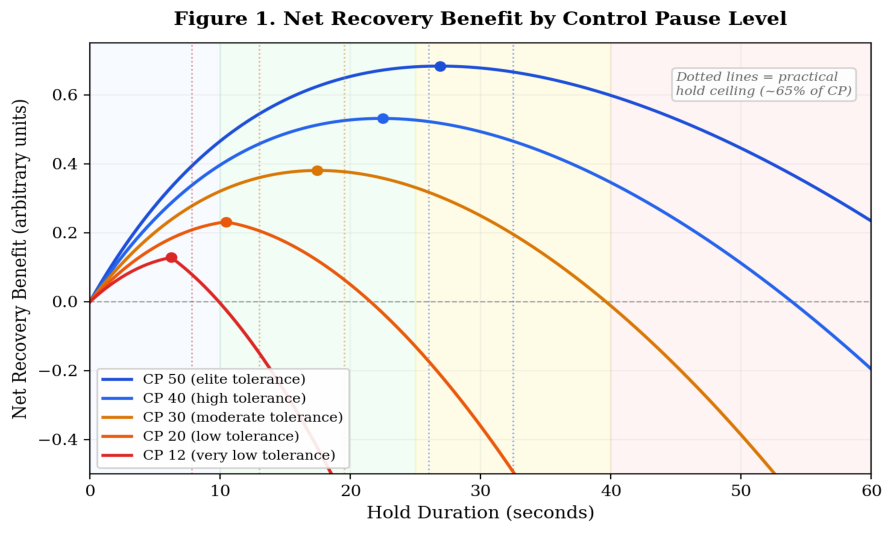
Figure 1. Predicted net recovery benefit as a function of hold duration across five Control Pause levels. Higher CP allows greater CO2 accumulation during holds (tolerance ceiling effect) and correlates with better buffering (slower acidotic penalty). Dots indicate predicted peak benefit; dotted vertical lines indicate the practical hold ceiling (~65% of resting CP post-exertion). A CP 12 athlete peaks at ~6 seconds with minimal benefit; a CP 50 athlete peaks at ~27 seconds with over five times the net benefit. Shaded zones indicate practical implementation categories. All values are theoretical projections requiring empirical calibration.
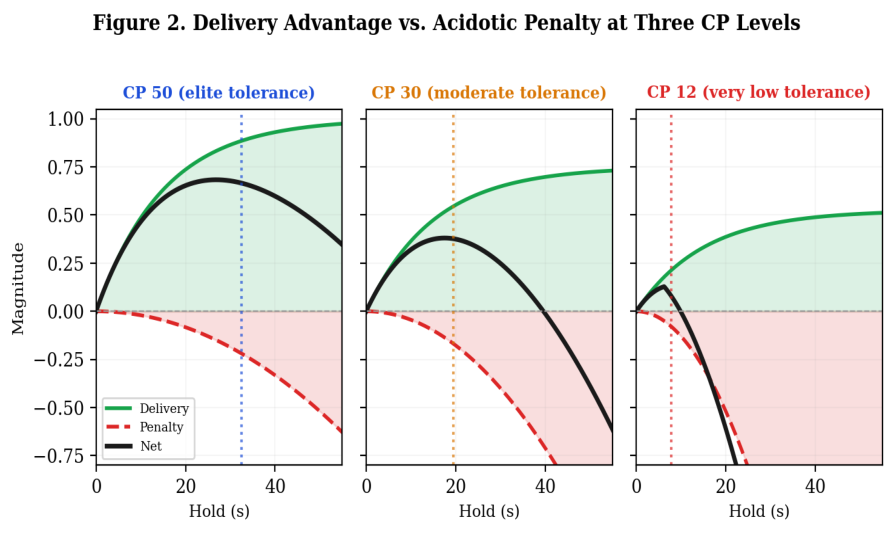
Figure 2. Component breakdown at three CP levels showing how Control Pause affects both sides of the trade-off. The delivery curve (green) is taller for higher-CP athletes because their higher tolerance ceiling allows greater CO2 accumulation during holds. The penalty curve (red dashed) rises more slowly for higher-CP athletes because of correlated buffering capacity. The black line shows the net effect. Dotted vertical lines indicate practical hold ceilings.
This trade-off has important implications for protocol design. First, it reinforces the Base Tier as the more universally beneficial intervention: nasal-only breathing produces mild CO2 retention sufficient for meaningful Bohr-effect enhancement without the aggressive pH depression of a deliberate hold. Second, it suggests that Advanced Tier benefit may be strongly context-dependent: modalities with longer macro-recovery windows (such as pitching, where between-innings rest of 3+ minutes allows the acidotic penalty to clear through proton efflux before the next bout) are better candidates than modalities with shorter rest intervals. Third, it adds buffering capacity as a second moderating variable alongside CO2 tolerance, and suggests that both should be assessed in any empirical validation of the protocol.
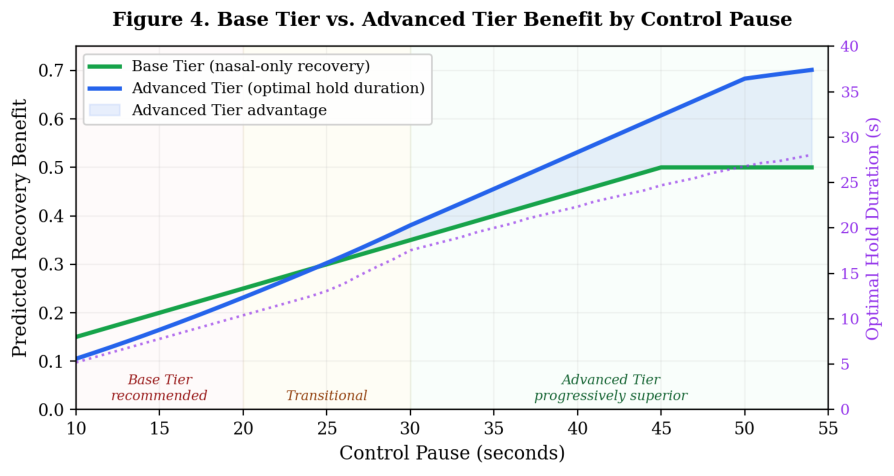
Figure 4. Comparison of Base Tier (nasal-only recovery, green) versus Advanced Tier (optimal-duration breath hold, blue) predicted benefit across the Control Pause spectrum. The purple dotted line (right axis) shows the predicted optimal hold duration at each CP level. Below CP 20, the Advanced Tier provides minimal additional benefit over the Base Tier and the Base Tier is recommended as the primary intervention. Between CP 20 and 30 is a transitional zone. Above CP 30, the Advanced Tier becomes progressively superior, with the gap widening at higher CP values. This figure illustrates why CO2 tolerance is the primary gating variable for protocol tier selection.
The Oxygen Availability Concern
A second concern is that breath holding during rest deprives muscles of oxygen when they need it most. This reflects a misunderstanding of the mechanism. The breath hold does not stop oxygen delivery to tissue. It stops oxygen loading at the lungs while maximizing oxygen unloading at the tissue. Blood continues circulating during the hold. Hemoglobin that was loaded with oxygen during preceding nasal breaths passes through muscle capillaries and, under the elevated CO2 conditions of the hold, releases its oxygen cargo more completely than it would under normal breathing conditions. The net tissue oxygen delivery during a 30-second hold may actually exceed the net tissue oxygen delivery during 30 seconds of oral breathing, because the Bohr effect is forcing more complete extraction from the hemoglobin that is present.
However, an important physiological limit applies. During the post-exertion period, the athlete's oxygen consumption rate (VO2) remains massively elevated from the preceding effort. Holding the breath at this specific moment depletes the oxygen in the lungs' functional residual capacity exponentially faster than a breath hold at rest. If the hold continues too long, alveolar PO2 drops below venous PO2, and arterial SpO2 leaving the lungs will plummet. At that point, the Bohr effect is maximally enhancing extraction from hemoglobin that is severely desaturated: offloading 60% of a 75%-saturated payload delivers less absolute oxygen than offloading 40% of a 99%-saturated payload. This provides an additional physiological mechanism for the right side of the inverted-U curve (Figures 1 and 2) and reinforces the importance of ending the hold before significant arterial desaturation occurs. The macro-recovery breath hold should be submaximal and must be terminated before the athlete experiences signs of systemic oxygen depletion.
Valsalva Interaction
Athletes already perform Valsalva maneuvers during heavy resistance sets, creating brief periods of breath holding under load. The VHR protocol's breath hold during rest is physiologically less demanding than the intra-set Valsalva because it occurs at rest without the hemodynamic stress of heavy loading. Athletes who already tolerate Valsalva during heavy sets will not find a post-exertion breath hold physiologically novel.
Practical Contraindications and Implementation Limits
The following safety boundaries should be observed. No breath holds while under load; the advanced tier is applied only after the load is safely racked or the athlete is seated or otherwise stable. Discontinue if dizziness, presyncope, panic, chest pain, or arrhythmia symptoms occur. Exercise caution with cardiovascular disease, uncontrolled hypertension, pulmonary disease, pregnancy, or syncope history. Use submaximal controlled holds, not maximal-effort holds. Nasal obstruction or congestion may defeat the base tier in some individuals. Combat sports and water-adjacent sports require particular caution regarding nasal trauma and drowning risk. Avoid advanced-tier holds late at night if they produce delayed arousal chemistry that may interfere with sleep.
Testable Predictions
Prediction 1: Athletes using VHR will show faster between-bout PCr resynthesis rates on 31P-NMR spectroscopy compared to oral breathing under equivalent exercise conditions.
Prediction 2: NIRS monitoring will show higher tissue oxygen saturation during rest intervals under VHR conditions, with the magnitude of the difference correlating with breath-hold duration and baseline Control Pause.
Prediction 3: Baseline CO2 tolerance (Control Pause) will independently predict between-bout recovery rate after controlling for VO2max, training age, and muscle fiber type proxies, because tolerance determines the athlete's ability to sustain the hypercapnic state required for the Bohr effect to operate.
Prediction 4: Athletes training with VHR over 4 to 8 weeks will show greater improvement in late-bout or late-set performance (repetitions to failure on final sets, power output on final sprints) compared to athletes training with identical volume, intensity, and rest intervals but with unrestricted oral breathing.
Prediction 5: End-tidal CO2 monitoring will show that VHR sustains higher PETCO2 during rest intervals, consistent with preservation of arterial CO2 relative to oral recovery, with retention magnitude correlating with Control Pause.
Prediction 6: The benefit of VHR will be absent or negligible in athletes with a Control Pause below 15 seconds, moderate in athletes with a CP of 20 to 30 seconds, and maximal in athletes with a CP above 40 seconds, producing a dose-response curve that maps directly onto CO2 tolerance.
Prediction 7: The advanced tier (breath holds during rest) will produce measurably greater recovery enhancement than the base tier (nasal-only breathing during rest) in athletes with CP above 30 seconds, with the differential increasing at higher CP values.
Prediction 8: In pitching, the combined micro/macro protocol (nasal breathing between pitches on the mound, breath holds between innings in the dugout) will produce a measurably flatter velocity decline curve across outings and better command retention in later innings compared to conventional breathing, measurable through standard pitch-tracking systems.
Proposed Minimal Viable Study Design
The most immediate empirical test would be a randomized crossover trial with 20 to 30 athletes stratified by baseline Control Pause (below 20 seconds versus above 30 seconds), using a repeated-sprint or multi-set resistance training protocol. Each athlete would perform the protocol under three conditions: oral breathing during rest (control), nasal-only breathing during rest (base tier), and nasal breathing plus recovery-phase breath holds during rest (advanced tier). Primary outcome measures would be NIRS-derived muscle reoxygenation rate during rest intervals, end-tidal CO2 during rest intervals, and performance decrement score across repeated bouts. Secondary measures would include subjective perceived recovery, heart rate variability during rest, and post-session blood lactate. CP stratification would test the dose-response prediction directly. This design is feasible within a single university exercise physiology laboratory and requires no specialized equipment beyond NIRS and capnography.
Broader Theoretical Context
VHR sits within a broader hypothesis that CO2 tolerance may modulate several domains of physiology. The same candidate upstream variable, chemoreceptor sensitivity to CO2, may influence ventilatory stability during sleep, anxiety-related chemosensory reactivity through amygdala ASIC1a activation, perceived daytime energy through baseline tissue oxygenation, and repeated-effort recovery during intermittent exercise. Each domain may represent a downstream consequence of the same shared regulatory variable.
The VHR protocol is one application within this broader physiological model in which CO2 tolerance may serve as a shared regulatory variable influencing oxygen delivery efficiency, sleep restoration, and physical recovery across multiple systems. An athlete who trains CO2 tolerance for exercise recovery may produce cross-domain benefits in some individuals, but those effects require separate validation and should not be assumed from the exercise recovery data alone.
Conclusion
Intermittent exercise creates recovery windows in which preserving CO2 may improve oxygen unloading and repeated-effort recovery, and existing hypoventilation protocols may have targeted the wrong phase. The conventional practice of heavy oral breathing between bouts of intense intermittent exercise clears CO2, shifts the oxyhemoglobin dissociation curve leftward, and may reduce functional oxygen availability to recovering muscles during the window when oxygen-dependent restoration processes are at peak demand.
The VHR protocol addresses this through a two-dimensional framework. The intensity dimension offers a base tier (nasal-only breathing, accessible to almost anyone) and an advanced tier (breath holds, requiring trained CO2 tolerance). The temporal dimension distinguishes micro-recovery windows (brief intervals where the base tier applies naturally without interfering with game demands) from macro-recovery windows (dedicated recovery time where the advanced tier may deliver maximum benefit). Together, these dimensions produce sport-specific implementations, from the 20 seconds between pitches on a mound to the 3 minutes between innings in the dugout, from the 15 seconds between tennis points to the 90-second changeover, from the rest interval between sets of squats to the corner between boxing rounds.
The protocol requires no equipment, no supplements, and no additional training time. It applies to intermittent activities with sufficient recovery windows and limited sustained ventilatory demand. It is designed to minimize work-phase performance cost by applying respiratory constraint during recovery rather than exertion, while producing testable improvements in recovery metrics. The critical missing variable in the existing literature is CO2 tolerance. No study has measured Control Pause, assessed baseline chemoreceptor sensitivity, or correlated individual tolerance with response magnitude. This gap represents both a limitation of the current evidence base and the most immediate opportunity for a novel contribution: the first study to demonstrate that a simple, non-invasive respiratory metric predicts exercise recovery rate and fatigue resistance through a specified physiological mechanism operating at the level of hemoglobin oxygen affinity.
References
Original bibliography wording is preserved. Linked source records identify verified bibliographic corrections; searches are labeled as searches.
- Jensen, F.B. (2004). Red blood cell pH, the Bohr effect, and other oxygenation-linked phenomena in blood O2 and CO2 transport. Acta Physiologica Scandinavica, 182(3), 215-227.
- Jubrias, S.A., Crowther, G.J., Shankland, E.G., et al. (2003). Acidosis inhibits oxidative phosphorylation in contracting human skeletal muscle in vivo. Journal of Physiology, 553(2), 589-599.
- Kemp, G.J., Thompson, C.H., Sanderson, A.L., Radda, G.K. (1994). pH control in rat skeletal muscle during exercise, recovery from exercise, and acute respiratory acidosis. Magnetic Resonance in Medicine, 31(2), 103-109.
- Lapointe, J., et al. (2020). Impact of Hypoventilation Training on Muscle Oxygenation, Myoelectrical Changes, Systemic [K+], and Repeated-Sprint Ability in Basketball Players. Frontiers in Sports and Active Living, 2, 29.
- Messineo, L., Taranto-Montemurro, L., Sands, S.A., et al. (2018). Breath-holding as a means to estimate the loop gain contribution to obstructive sleep apnoea. Journal of Physiology, 596(17), 4043-4056.Bibliographic note: Pharmacological recalibration reference gives a different title and incorrect volume/pages; verified article is 596(17):4043–4056. Maximal breath-hold testing was evaluated as a marker of loop gain, not as a therapeutic training intervention.
- Quistorff, B., Johansen, L., Sahlin, K. (1993). Absence of phosphocreatine resynthesis in human calf muscle during ischaemic recovery. Biochemical Journal, 291(3), 681-686.
- Rapoport, D.M., Norman, R.G., Berger, K.I., Goldring, R.M. (1993). CO2 homeostasis during periodic breathing: predictions of a computer model. Journal of Applied Physiology, 75(5), 2302-2309.
- Woorons, X., Faucher, C., Dufour, S.P., et al. (2024). Hypoventilation training including maximal end-expiratory breath holding improves the ability to repeat high-intensity efforts in elite judo athletes. Frontiers in Physiology, 15, 1441696.
Cite this edition
Locke. Voluntary Hypercapnic Recovery: Targeting the Recovery Phase in Intermittent Exercise Through CO2-Preserved Oxygen Unloading. Manuscript: May 2026. First web edition: October 18, 2026. Web revision 9, October 18, 2026. Digital Overbreathing research publication.
This full-text page is the website reading edition. Its date and checksum appear in the edition manifest. See the revision record for the manuscript history.